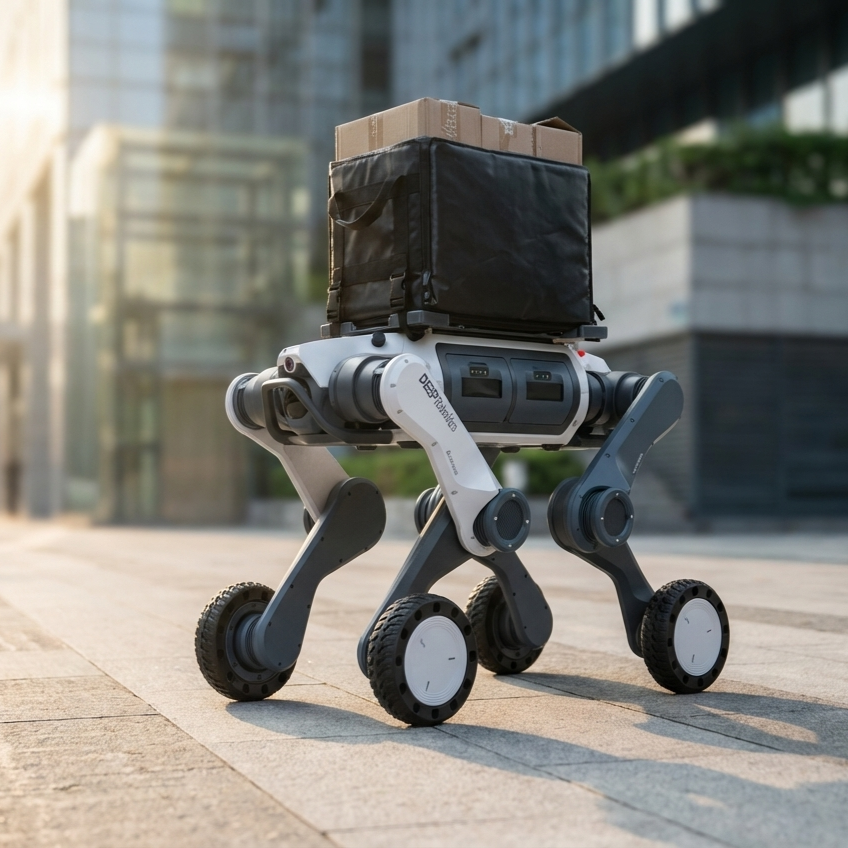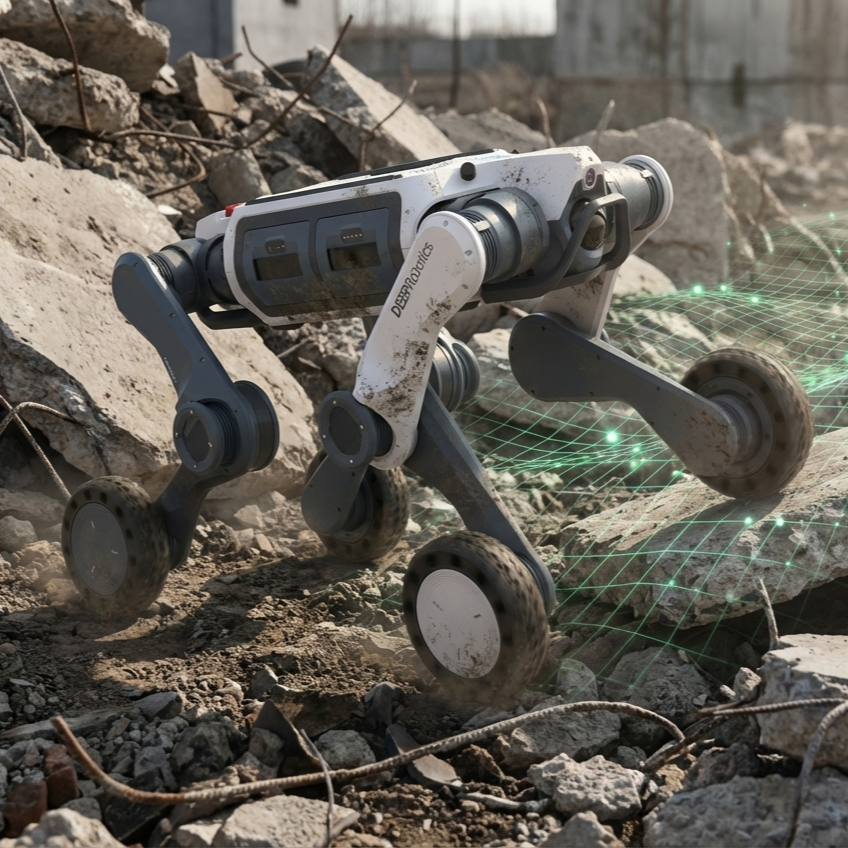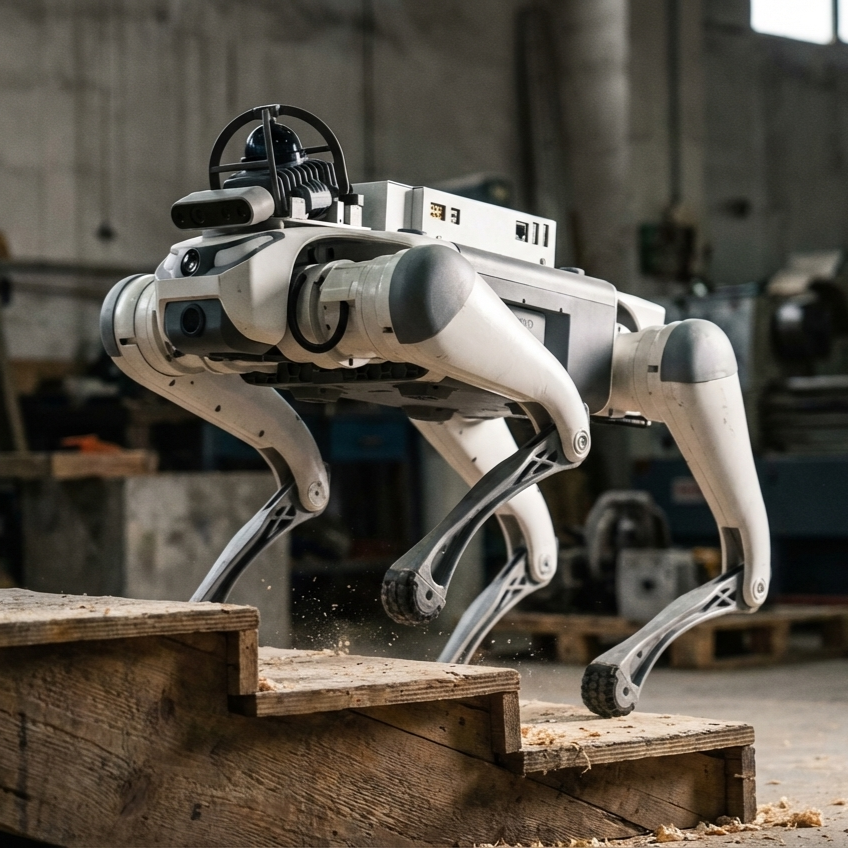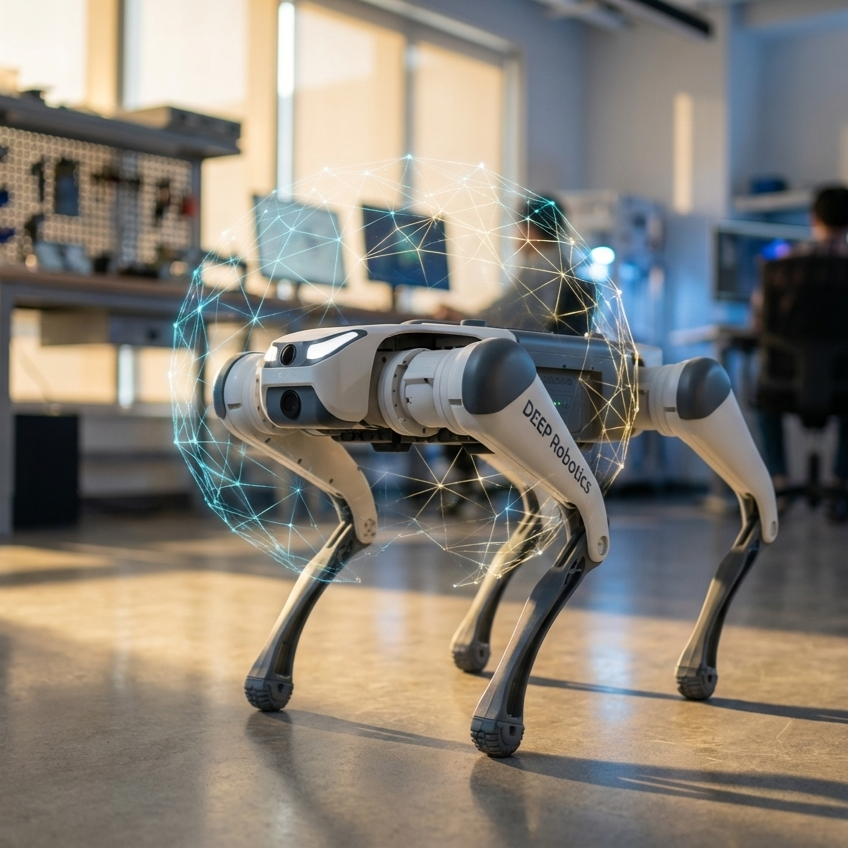
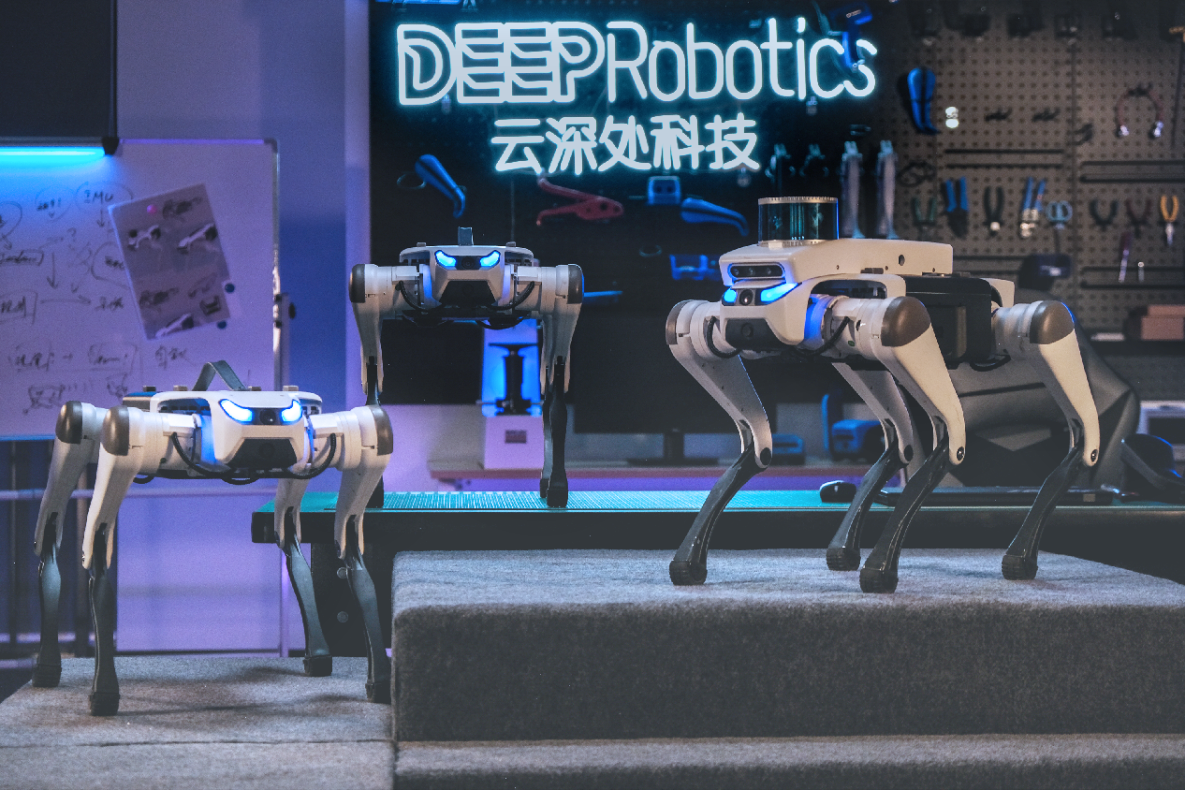
Quadruped robots are rapidly transforming how students, researchers, and developers explore robotics—and the DEEP Robotics Jueying Lite3 stands at the center of this change. Designed as a lightweight, agile, and fully programmable quadruped, Lite3 gives users the freedom to build, test, and deploy advanced robotic applications without the complexity of industrial-grade systems.
Whether you’re teaching robotics, conducting motion research, or prototyping real-world solutions, Lite3 provides a professional platform that is easy to work with, safe to experiment on, and powerful enough for high-level innovation.
1. A Scalable Platform for Robotics Education
Universities and training institutions use Lite3 to teach:
-
Legged robot locomotion
-
Balance & control
-
Perception & environment interaction
-
AI-based motion behavior
-
ROS-based development workflows
With clear documentation, a stable motion system, and a complete development SDK, students can focus on learning real robotics concepts rather than struggling with hardware. The robot’s moderate size (≈11kg body and ≈1.12kg per leg) makes it safe for classroom handling.
Lite3 helps educators turn theoretical robotics classes into hands-on learning experiences.
2. A Research Tool for Universities & Innovation Labs
For research teams exploring next-generation robotics, Lite3 provides:
-
Accurate joint feedback
-
Flexible control interfaces
-
A programmable motion pipeline
-
High-speed, real-time motion execution
Researchers across fields—mechanical engineering, AI, control theory, and motion planning—use Lite3 to prototype:
-
New gait behaviors
-
Terrain-adaptive locomotion
-
Reinforcement learning algorithms
-
Human–robot collaboration
-
Quadruped navigation and mapping
Its open SDK enables fast iteration and experimentation, while built-in protections (such as fall-down and overtemperature protections) allow developers to test bold ideas safely.
3. A Practical Platform for Robotics Startups & Developers
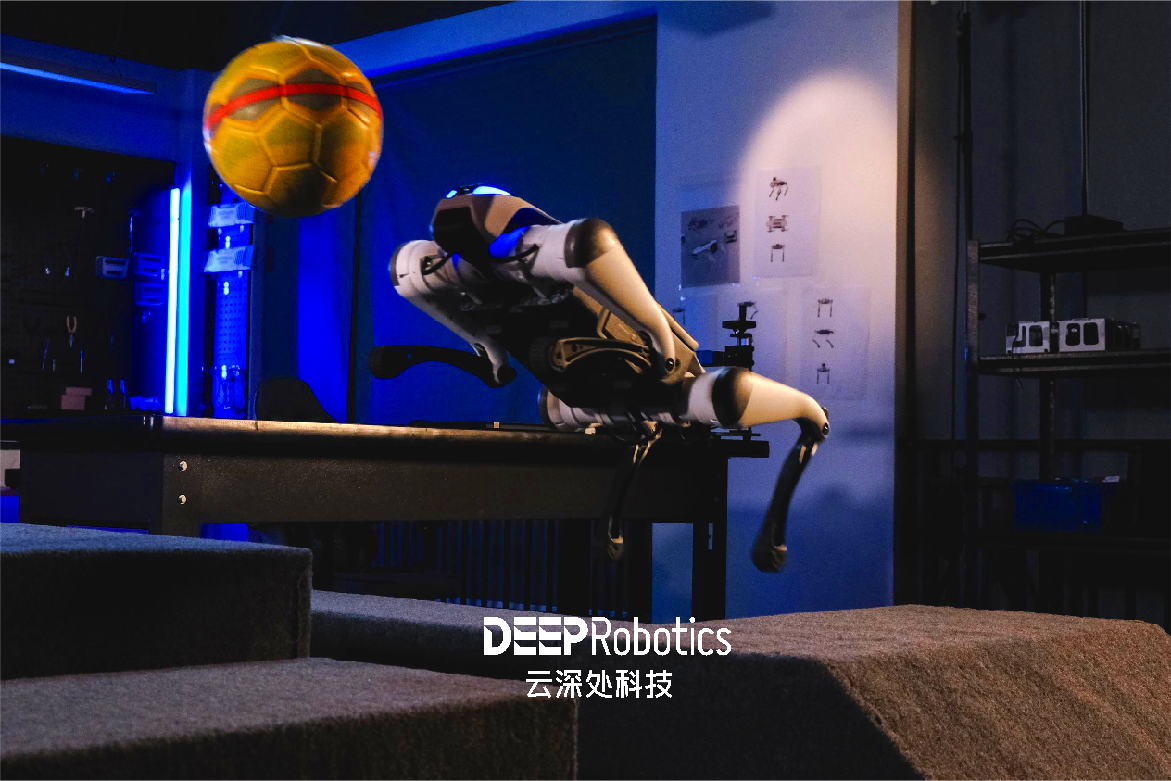
Startups and developers building real-world robotics applications benefit from Lite3’s agile motion foundation. The robot can serve as a development base for:
-
Warehouse automation prototypes
-
Inspection & patrol demos
-
AI-powered autonomous movement
-
Teleoperation platforms
-
Exploration or environmental data collection
Because the Lite3 includes a full set of motion logs, joint status readouts, and real-time control functions, developers can quickly transform ideas into working demonstrations.
4. Ideal for Motion Algorithm Development
While the manual describes the internal structure of the robot and SDK, the biggest value to developers is that Lite3 solves the “hard parts” of quadruped locomotion so you can build on top of it.
Teams can focus on designing:
-
Custom gaits
-
Autonomous navigation behaviors
-
Stabilization or recovery strategies
-
AI-driven movement styles
-
Application-specific task routines
Meanwhile, Lite3 handles the essential foundation—consistent joint performance, precise sensing, and safe protection mechanisms.
5. Safe & Reliable for Experimentation
Application development requires a robot that can withstand failures, testing, and constant iteration. Lite3 includes safety protections such as:
-
Fall-down protection: Robot stops if posture becomes unstable
-
Overtemperature protection: Motors automatically rest when overheated
-
Logging and data capture for debugging motion behavior
These features allow beginners, students, and researchers to experiment without fear of damaging the robot.
6. Versatility Across Different Real-World Scenarios
Because Lite3 is lightweight, agile, and capable of dynamic motion, it’s widely adopted in cases such as:
Education
Hands-on robotics curriculum, workshops, university labs, and competitions.
Scientific Research
Algorithm testing, biomechanical studies, AI motion learning, sensors integration.
Industry Exploration
Prototypes of inspection robots, R&D concept verification, simulation-to-real transfer testing.
Entertainment & Creative Projects
Interactive robotics shows, walking mascots, performance art, or experience exhibitions.
Its mobility and programmability make it suitable for virtually any environment requiring a compact and dynamic quadruped.
Lite3 Is the Most Accessible Quadruped for Application Development
The DEEP Robotics Lite3 strikes the ideal balance between affordability, capability, safety, and openness, making it one of the best platforms for robotics application development around the world.
Whether you’re an educator building the next robotics program, a researcher developing new locomotion models, or a developer exploring real-world automation, Lite3 gives you a powerful starting point—without locking you into a closed ecosystem.
About the Author: Iven Wang